




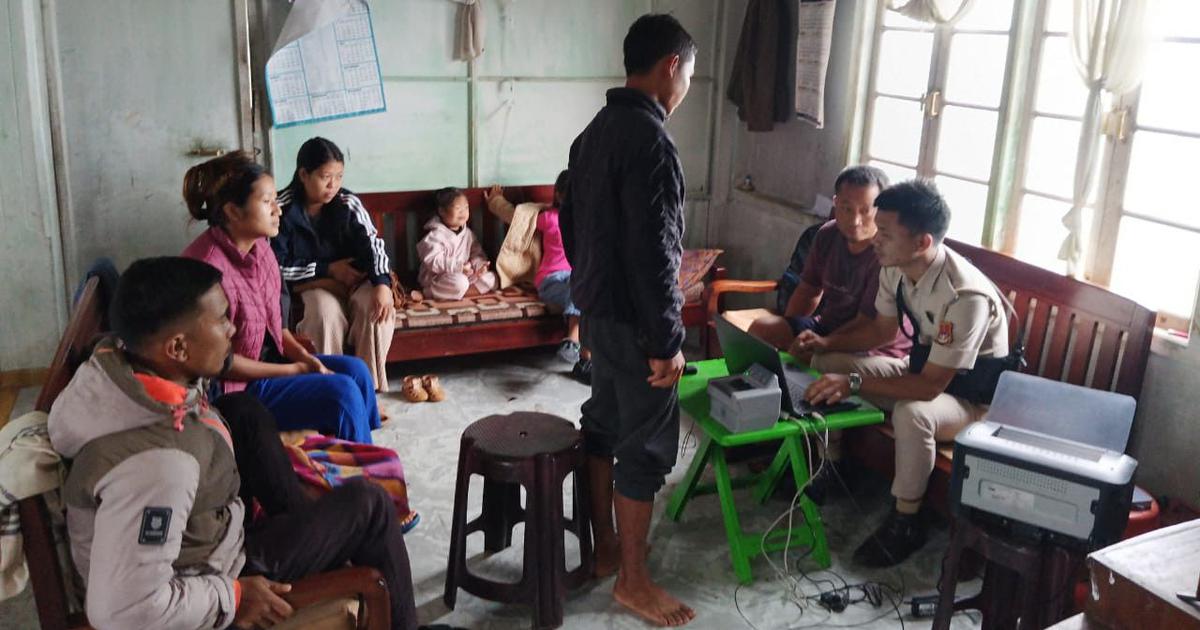
Last month, the Mizoram government began collecting biometric data of refugees from Myanmar and Bangladesh who have been living in the state for the last four years.
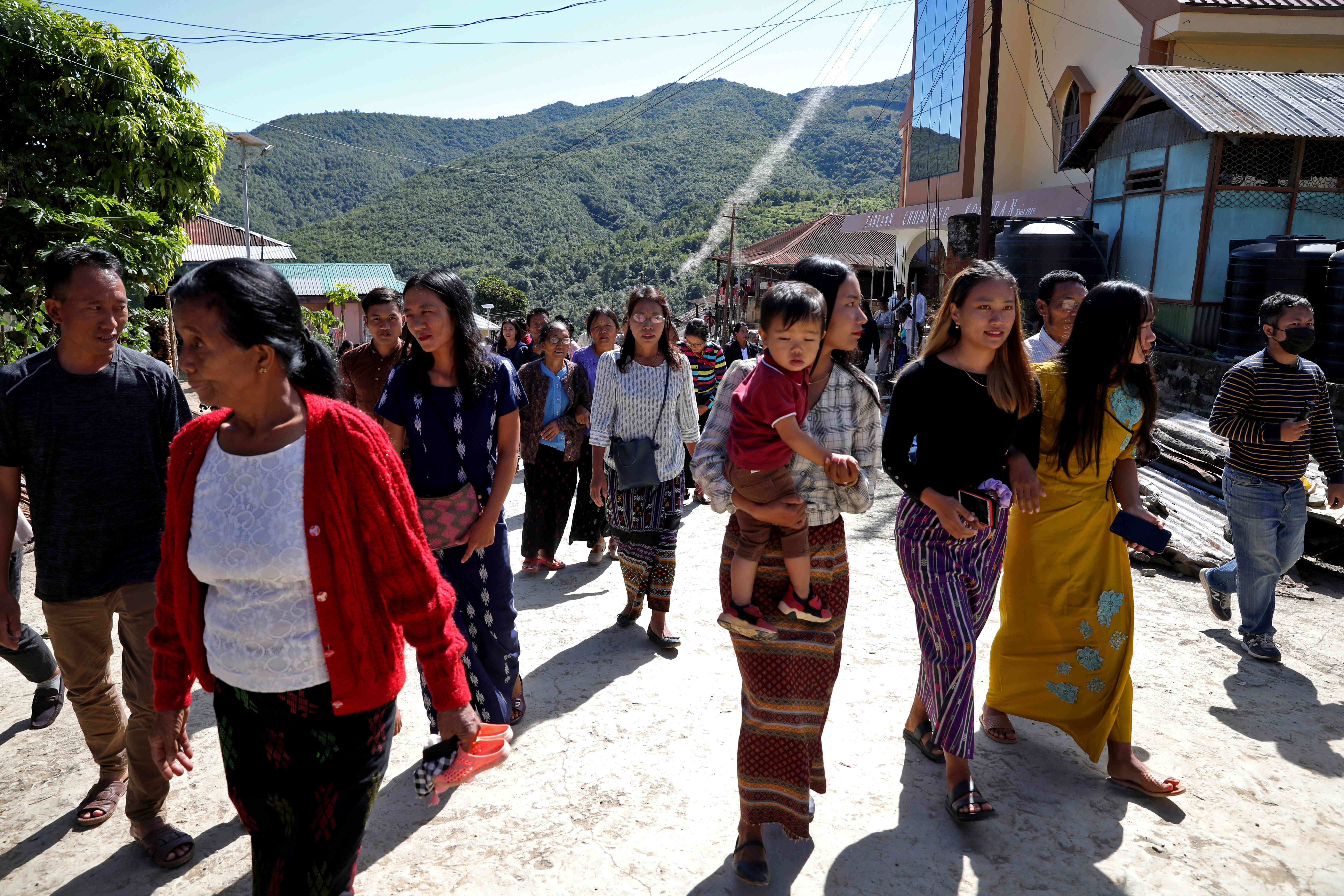
The state hosts nearly 40,000 Chin refugees from Myanmar and Bangladesh who fled the conflict in their homes in 2021. They were welcomed to the state as the kin of Mizo people, even though the Narendra Modi government was opposed to the influx of “illegal immigrants”.
In 2023, Chief Minister Zoramthanga of the Mizo National Front refused to comply with the Modi government’s order to collect biometric and biographic details of the refugees.
Even after Zoramthanga was voted out, the state government’s stance did not change. In February 2024, the current government led by Chief Minister Lalduhoma announced in the state Assembly that his government would not collect biometric details of the refugees.
But in March, as the goodwill for the refugees waned, the state government went back on its word and agreed to register them by their biometric data.
As the exercise takes off, refugee leaders, lawyers and human rights activists are warning against its risks. “The collection of biometrics from people fleeing conflict/persecution, without clear rules on onward sharing and without securing free and informed consent, can leave entire communities at risk,” Delhi-based lawyer and researcher John Simte said.
The data collection
The biometric data collection is being carried out in 11 districts, according to a 2023 directive from the Ministry of Home Affairs to collect biometric data of all “illegal immigrants”.
Andrew H Vanlaldika, Mizoram’s additional home secretary, said the district deputy commissioners have been entrusted to collect iris scans, fingerprints, and photographs, as well as information on the occupation, home addresses, and names of relatives of the refugees.
He added that the data is being stored on the Foreigner's Identification Portal, which can be accessed by the home ministry.
A nodal officer of Champhai, a border district with Myanmar, which has the highest number of refugees, said all the refugees were asked to fill a form with details of parents’ names, date of birth, gender, address in Myanmar, residence in India.
“The hard copies are still with the home department,” the officer said.
Digital rights activist Srinivas Kodali said the exercise had an aim in mind: “to ensure that foreigners are not provided with national identities in India, specially Aadhaar cards and passport”.
He explained: “The Supreme Court in its Aadhaar judgement tasked the government to ensure illegal immigrants are not part of the Aadhaar database and they are empowered to collect these biometrics to ensure this. While this power exists, it is being misused.”
The risks
Salai Dokhar, founder of India for Myanmar, a New Delhi-based group advocating for human rights and democracy in Myanmar, warned that the exercise could be used to punish critics and opponents of the junta.
Dokhar said his concern stems from the fact that the Indian government signed a memorandum of understanding in July with Myanmar’s State Administration Council – the official name of the junta that came to power through a coup in 2021 – to create a digital identity project.
Under this agreement, the Indian government will “extend essential IT assistance to support the implementation of a foundational digital identification system in Myanmar”.
“India's biometric data collection is not a solution to a problem,” Dokhar told Scroll. “It appears to be a collaboration with the SAC to target resistance groups and their supporters.”
Any leak of sensitive data could put the refugees at risk, other experts warned.
“If pro-junta elements are able to access the data, refugees who took part in the anti-military civil disobedience or those with political backgrounds could be targeted once they return,” said Angshuman Choudhury, a researcher who works on North East and Myanmar. “Alternatively, their families back in Myanmar could be targeted. The leaks could also put refugees at risk inside Mizoram where anti-refugee sentiments are already high.”
A 47-year-old refugee in Aizwal said he was worried about being asked for such data. “For Burmese politicians and activists who are taking refuge here, giving biometrics is risky,” he said. “All the data can be leaked or shared with the Myanmar junta. The relationship between Indian and Myanmar is quite good. There is a give and take policy.”
Legally, biometric data in India is governed under the Digital Personal Data Protection Act, 2023. But, it is not clear whether refugees, who are technically “illegal immigrants” under Indian law, are entitled to its protection.
“The law also doesn’t expressly restrict cross-border transfer of biometric data,” Choudhury said. “This means that if the junta requests, the Indian government could legally transfer the data to Myanmar military authorities.”
A leader of the Young Mizo Association, the state’s largest civil society group, told Scroll that some refugees in the border district of Champhai have refused to give their biometric data for precisely this reason.
Such concerns are not without basis. Simte, the Delhi-based lawyer, pointed to how the United Nations High Commissioner for Refugees had shared the biometric data of Rohingyas with Myanmarese authorities in 2021, putting them at risk of forced repatriation and persecution.
Thousands of Rohingya have fled persecution and violence in Myanmar and taken shelter in refugee camps in Bangladesh.
“Authorities often insist that biometrics is key to establish identities and to provide humanitarian assistance,” Meenakshi Ganguly, deputy director of Human Rights Watch, Asia. “However, biometric data is extremely sensitive, and can risk individual security if leaked, particularly when they have fled from a hostile and abusive government, and violates privacy rights.”
In 2022, a large number of Afghans, especially those who worked with the military, were put at risk once the Taliban accessed the biometric data that Western donor governments left behind.
‘Purpose creep’
Apar Gupta, advocate and founder director of the Internet Freedom Foundation, said the rationale for such an intrusive exercise is “thin…unless backed by clear, public safeguards”.
The bulk biometric enrolment of refugees involves several risks, he said, especially “purpose creep”.
Once fingerprints or iris scans are captured in the home ministry’s Foreigners Identification Portal workflow, they can be “reused across immigration and policing systems, drifting from identity verification to surveillance and enforcement”, Gupta said.
In the absence of safeguards, Gupta warned, refugee biometrics can bleed into criminal identification repositories, normalising the treatment of displaced people as suspects.
He also warned that mass biometrics can set up a "refoulement pipeline”, making it easier to repatriate refugees against their wishes.
Refoulement refers to the forcible return of refugees or asylum seekers to a country where they are liable to be subjected to persecution.
The question of consent
The experts also wondered whether the Mizoram authorities have taken the consent of the refugees or explained the implications of the data collection project to them.
“The data protection law stipulates the need for consent, but again, refugees may not be entitled to its provisions,” Choudhury said.
A refugee leader based in Aizawl told Scroll that government officials do not ask for their consent while collecting the data. “They just come along with the police and take our fingerprints,” the leader said.
Additional secretary Vanlaldika denied allegations that their consent was not taken, saying they were informed about the biometric exercise.
However, activists and lawyers say the refugees do not have much choice but to obey. “Because it is not their home country,” a Guwahati-based lawyer, who does not want to be named, told Scroll.
The 47-year-old refugee concurred. “We are not in our own country,” he said. “We cannot say no. We have to follow the law especially because the Mizoram government has treated us very well in the past.”
Read more:
